

The Village of Pouce Coupé recently faced a pressing environmental challenge: Bank erosion on the Pouce Coupé River was threatening critical infrastructure. To protect assets and prevent untreated water from entering the river, a two-year bank stabilization project was launched by Urban Systems.
The Village has a lagoon system for sanitary sewer processing, which consists of settling ponds, aerators, treatments, and sand beds that remove solids and other contaminants before the remaining treated water is discharged into the river. Bank erosion on the western side of the river posed a threat to the treatment lagoon, and bank revetment was required to protect the lagoon along with other important infrastructure. Bank revetment will prevent future erosion and ensure that the treatment facility can continue to operate and function properly for years to come. The project involved dewatering sections of the river and implementing measures like riprap, toe buttresses, and restoration planting to reinforce the bank and restore habitat integrity.
Fish Salvage: Breaking Records
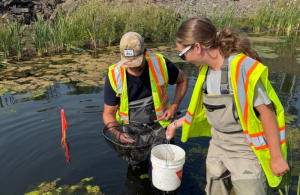
A key component of the project was the fish salvage operation, which turned out to be the largest in Urban’s history. The river’s mucky substrate and cold fall temperatures made electrofishing impossible, adding a layer of complexity to the project. The operation required nearly 100% salvage due to the extensive dewatering, with minnow traps and dipnetting as the primary method. In 2024, the team salvaged around 4,000 fish, a number that seemed impressive until 2025, when a staggering 14,001 fish were salvaged over the span of two weeks!
Species & Habitat
Most of the fish salvaged were hardy coarse species, white suckers, brook stickleback, and redside shiners, capable of surviving in challenging conditions. The team meticulously counted and measured the fish, ensuring accurate records and compliance with the applicable permit.
Teamwork & Learning
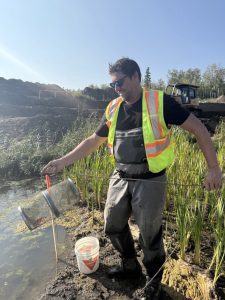
The project was a collaborative effort involving environmental consultants, engineers, students, and restoration specialists. Junior team members gained hands-on experience, while experienced professionals shared their expertise and encouraged learning. The demanding nature of the work, physically and logistically, meant the team had to lean on one another for support. The team’s adaptability and problem-solving skills were tested, especially when unexpected challenges arose, such as reconnecting the river. Despite challenges, the project still turned out to be a major success.
Restoration & Long-Term Impact
Beyond stabilization, the project prioritized ecological restoration. Large wood pieces were anchored to the bank, and riparian plants like willows were added to enhance habitat complexity, stabilize the bank, and support aquatic life. These measures will help regulate water temperature, provide cover, and improve nutrient cycling, ensuring the river’s health for years to come.
Looking Ahead
As communities continue to grapple with riverbank erosion and infrastructure risks, projects like this will become increasingly important. The lessons learned about teamwork, problem-solving, and ecological restoration will guide future efforts and help protect vital resources.
Want to learn about other projects we have supported? Click here to read more stories: Our Stories – Urban Systems